Solid state relays (SSRs) have become essential components in modern automation systems. Understanding their wiring diagrams is critical for ensuring accurate control, seamless integration, and long-term system efficiency. Mastering SSR wiring diagrams provides engineers, technicians, and automation enthusiasts with the knowledge to implement reliable and precise solutions across various industrial and commercial applications.
Understanding Solid State Relay Wiring Basics
A solid state relay operates as an electronic switch, controlling electrical loads without mechanical contacts. Proper comprehension of its wiring diagram is fundamental for:
- Ensuring correct input and output connections.
- Preventing system malfunctions caused by miswiring.
- Maintaining electrical safety and minimizing hazards.
By studying the wiring diagram, one can quickly identify control signals, load terminals, and auxiliary connections. This understanding is essential for designing efficient automation circuits. Students study solid state relay wiring diagram for practical skills.
Advantages of Accurate SSR Wiring Knowledge
Mastering SSR wiring diagrams delivers multiple advantages:
- Enhanced Precision in Automation: Correct wiring ensures timely and accurate switching, which is vital for processes requiring precise control.
- Reduced Downtime: A clear understanding of connections minimizes installation errors, lowering the risk of equipment failure.
- Simplified Maintenance: Accurate wiring knowledge allows for faster troubleshooting and easier system upgrades.
- Energy Efficiency: Proper integration avoids unnecessary energy losses by ensuring relays operate optimally.
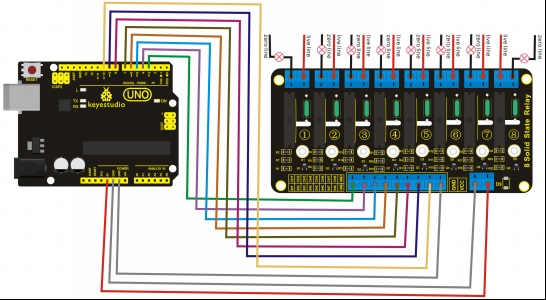
Best Practices for Wiring Integration
Following best practices enhances both safety and system performance:
- Verify Control Signals: Ensure the input voltage and signal type match the SSR specifications.
- Check Load Ratings: Confirm the relay can handle the intended load to prevent overheating or damage.
- Use Correct Wire Gauge: Appropriate wiring ensures minimal voltage drop and secure connections.
- Isolate Sensitive Components: Prevent interference by separating control and power circuits where possible.
- Document Wiring Layouts: Maintaining updated wiring diagrams helps streamline future upgrades and troubleshooting.
Optimizing Automation with SSR Wiring Mastery
Understanding SSR wiring is not just about connecting terminals correctly it is about optimizing system performance. Mastery enables:
- Seamless integration with programmable logic controllers (PLCs) and industrial automation networks.
- Synchronization of multiple SSRs in complex processes.
- Predictable response times, which are essential for high-speed or precision tasks.
- Scalable designs that accommodate future system expansion without major rework.
Conclusion
Mastering solid state relay wiring diagrams empowers engineers and technicians to achieve precise automation integration. With accurate wiring knowledge, systems operate more reliably, maintenance becomes straightforward, and overall efficiency improves. By following best practices and understanding each connection’s role, SSRs can be seamlessly incorporated into any automation environment, enhancing both performance and safety. Investing time in studying and mastering these diagrams ensures a smooth, reliable, and highly optimized automation setup.