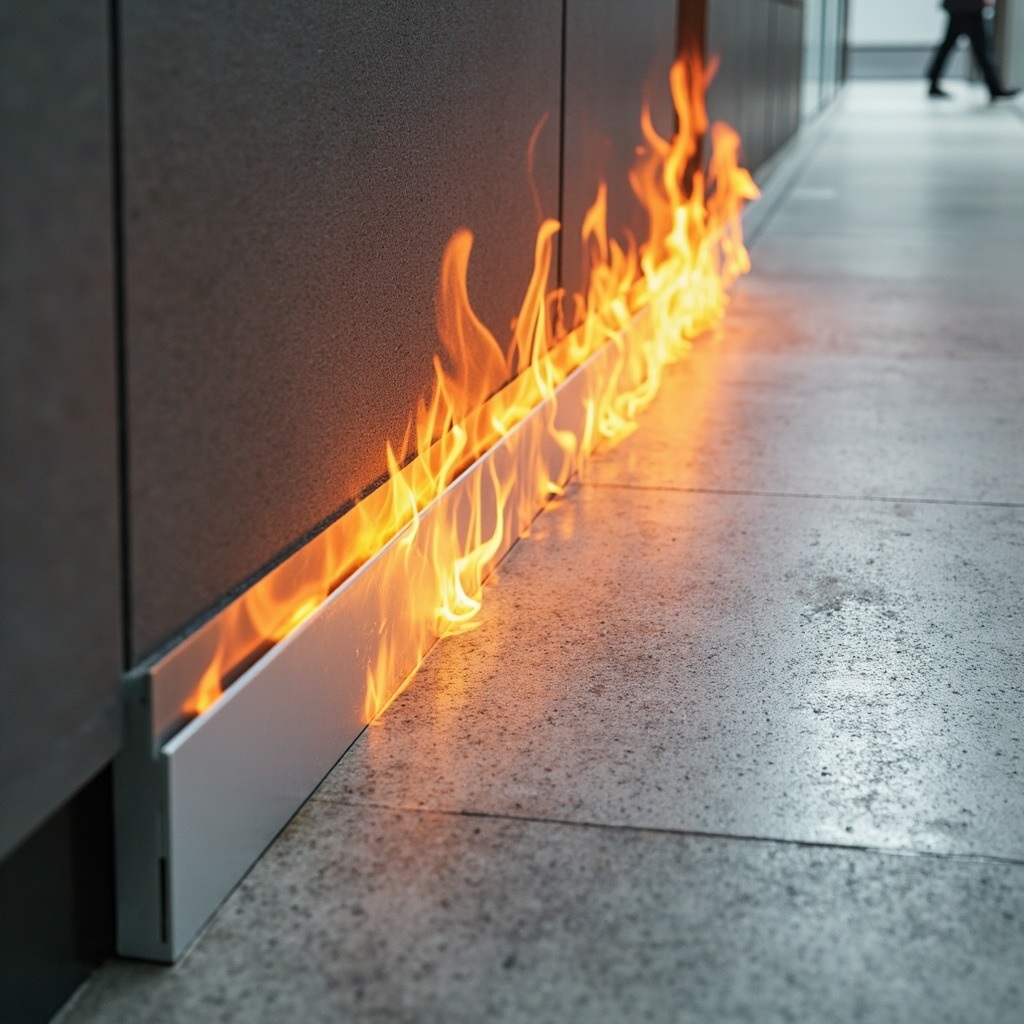
 Let’s cut through the noise. When you specify materials for a commercial interior, you aren’t just picking colors and finishes. You are signing off on safety. And in the world of building codes, fire performance ratings aren’t a suggestion—they are the law. So why are so many designers still dragging their heels on Aluminum Alloy Baseboard? Because they haven’t looked at the data.
Here is the raw truth: traditional wood or vinyl baseboards are liabilities. They burn. They melt. They drip flaming debris. In a high-occupancy space like an office lobby, a hospital corridor, or a retail floor, those materials can turn a minor electrical fault into a vertical flame spread disaster. Aluminum alloy baseboard? It doesn’t play that game.
We are talking about a material that carries a Class A fire rating—the gold standard under ASTM E84. That means a flame spread index of 25 or less and smoke developed index under 450. For context, red oak is a Class C material with a flame spread around 100. Aluminum alloy baseboard laughs at that number. It is non-combustible by nature. It does not ignite. It does not contribute fuel to a fire. It simply sits there, cool and unbothered, while the rest of the room might be going up.
But let’s get practical. You are a specifier. You need this to look good, too. The beauty of modern aluminum alloy baseboard is that it isn’t that cold, industrial strip you remember from the 1980s. Today’s extrusions come with clean lines, powder-coated finishes, and even wood-grain textures that fool the eye. You get the aesthetic of a premium hardwood baseboard with the fire performance of a steel beam. That is a trade-off that makes no sense to refuse.
And here is the kicker: installation. Wood baseboards require nails, putty, caulking, and touch-up painting. They swell in humidity. They warp over time. Aluminum alloy baseboard clips onto a track. No exposed fasteners. No painting. No warping. In a commercial setting where downtime costs money, that speed of installation is a direct line to your bottom line.
One more thing that often gets buried in the technical sheets: smoke toxicity. In a fire, synthetic baseboards can release hydrogen chloride or other noxious gases. Aluminum alloy? It produces zero toxic smoke. In an evacuation scenario, those few extra seconds of clear visibility can make the difference between a drill and a tragedy.
So when you are sitting in that meeting, flipping through the finish schedule, and someone says “let’s just use the vinyl cove base because it’s cheaper,” you have the ammunition. You can point to the fire code. You can point to the lifecycle cost. And you can point to the fact that aluminum alloy baseboard doesn’t just meet the rating—it exceeds it with room to spare.
Stop treating baseboard like an afterthought. It is a fire barrier. It is a finish. It is a performance decision. And aluminum alloy is the only choice that wins on all three fronts.